


Starts at 10% of revenue.
Arizona Airbnb and Short-Term Rental Regulations (2026 Update)
Arizona’s sunny climate, stunning desert landscapes, and thriving metropolitan areas have long made it a magnet for tourists. In recent years, the state has become a top destination for short-term rental investments, thanks to high demand in popular vacation spots like Phoenix, Scottsdale, Sedona, and Flagstaff.
While Arizona enacted a state law preventing local governments from broadly banning short-term rentals, various municipalities still impose their own taxes and regulations. This article provides an up-to-date overview of the statewide rules and takes a closer look at how some major Arizona cities handle short-term rentals.
Arizona’s Definition of a Short-Term Rental
Arizona does not set a universal day-limit threshold that defines a short-term rental for all regulatory purposes. However, Senate Bill (SB) 1350, passed in 2016, made it illegal for Arizona municipalities to prohibit or restrict the use of residential properties as short-term rentals based solely on their classification. Since then, newer laws—such as House Bill (HB) 2672 in 2019 and additional legislation in 2022—have given local governments some leeway to regulate health, safety, and nuisance issues.
In practical terms, any property listed on Airbnb, Vrbo, or a similar platform for fewer than 30 consecutive days typically falls under the “short-term rental” or “vacation rental” category. However, each city or town may impose slightly different definitions and rules for taxation, licensing, and community standards.
Starting a Short-Term Rental Business in Arizona
One of the first steps to legally operating a short-term rental in Arizona is determining your tax obligations. Most hosts will need to register for a Transaction Privilege Tax (TPT) license through the Arizona Department of Revenue (ADOR) unless the hosting platform automatically collects and remits these taxes on your behalf. The TPT functions similarly to a sales tax on businesses; for short-term lodging, you’ll collect it from guests and remit it to the state and any applicable local jurisdictions.
Next, you must verify whether the city or county in which your property is located has additional registration or licensing requirements. Because Arizona law prohibits a complete ban on short-term rentals, many jurisdictions focus instead on nuisance regulations—such as noise ordinances, parking restrictions, and occupancy limits—and may require owners to provide local emergency contact information. Always consult the relevant city or town government website or code enforcement office to confirm what is required in your area.
Short-Term Rental Licensing Requirement in Arizona
Arizona does not maintain a statewide short-term rental permit, but a few notable points apply:
- State TPT License: If you collect rental income, you generally need to secure a Transaction Privilege Tax license from the Arizona Department of Revenue, unless a booking platform is remitting all taxes for you (in which case, you should confirm you’re fully covered).
- Local License/Registration: Some municipalities, such as Scottsdale and Paradise Valley, have begun requiring short-term rental owners to register or obtain a local license to operate. This local registration usually involves a fee, proof of liability insurance, and the designation of an emergency contact.
Because these requirements vary by location and are frequently updated, prospective hosts should review the local government’s official regulations to ensure compliance.
Arizona Short-Term Rental Taxes
The taxes applicable to short-term rentals in Arizona typically include:
- State Transaction Privilege Tax: The Arizona TPT rate on transient lodging is around 5.5% to 5.6%.
- County and City Add-Ons: Depending on your location, you may encounter county TPT and city sales or lodging taxes. Local rates can range from 2% to over 5%, on top of the state rate.
- Filing Frequency: Depending on your average monthly tax liability, you may file monthly, quarterly, or annually. If a platform such as Airbnb collects and remits these taxes for you, you should still confirm that covers all state, county, and municipal taxes.
Be sure to maintain accurate records of rental income, cleaning fees, and other charges, as these generally factor into your taxable gross receipts.
Vacation Rental Tax Deductions
In addition to complying with state and local taxes, Arizona hosts can usually benefit from federal and potential state tax deductions if they rent out their property for more than 14 days per year. Some common deductible expenses include:
- Mortgage interest and property taxes
- Insurance premiums
- Maintenance and repairs
- Utilities and internet
- Furnishings and appliances depreciation
- Professional service fees (e.g., accounting or legal advice)
Always consult up-to-date IRS guidance and consider speaking with a tax professional to ensure you maximize the potential benefits and remain in compliance with all regulations.
Short-Term Rental Regulations by Major Locations in Arizona
1. Phoenix
Phoenix, the state’s capital and largest city, does not ban short-term rentals, in line with SB 1350. However, operators must comply with standard nuisance and noise ordinances. If you’re collecting rental revenue, you must register with the ADOR for a TPT license or verify that your platform collects and remits TPT on your behalf. While Phoenix does not currently require a specific STR permit, owners must follow general local rules regarding occupancy limits and safety codes.
2. Scottsdale
Scottsdale updated its vacation rental ordinance in response to the state granting localities more regulatory power. As of 2023, owners must apply for a short-term rental license, provide a 24/7 emergency contact, and confirm that the property has adequate liability insurance. The city also enforces strict penalties for repeat nuisance or safety violations, which can lead to suspension of the property’s rental license. The TPT and city sales tax bring the total lodging rate to roughly 14% in certain areas.
3. Tempe
Similar to Phoenix, Tempe recognizes SB 1350 but maintains local authority to enforce nuisance rules and collect TPT. Short-term rentals are permitted in residential zones, provided owners comply with parking rules, noise restrictions, and safety standards. Currently, there is no specific STR permit, but the city council has proposed additional regulations in recent years. Check the city’s website regularly for any updates to licensing or registration requirements.
4. Tucson
Tucson does not have a dedicated short-term rental ordinance but does require hosts to collect and remit TPT and city sales tax on any stays under 30 days. The city also enforces standard neighborhood regulations on noise and trash. While there is no separate Airbnb-specific license, local legislation can evolve quickly, so keep an eye on Tucson’s municipal code or sign up for city council notifications to stay informed.
5. Sedona
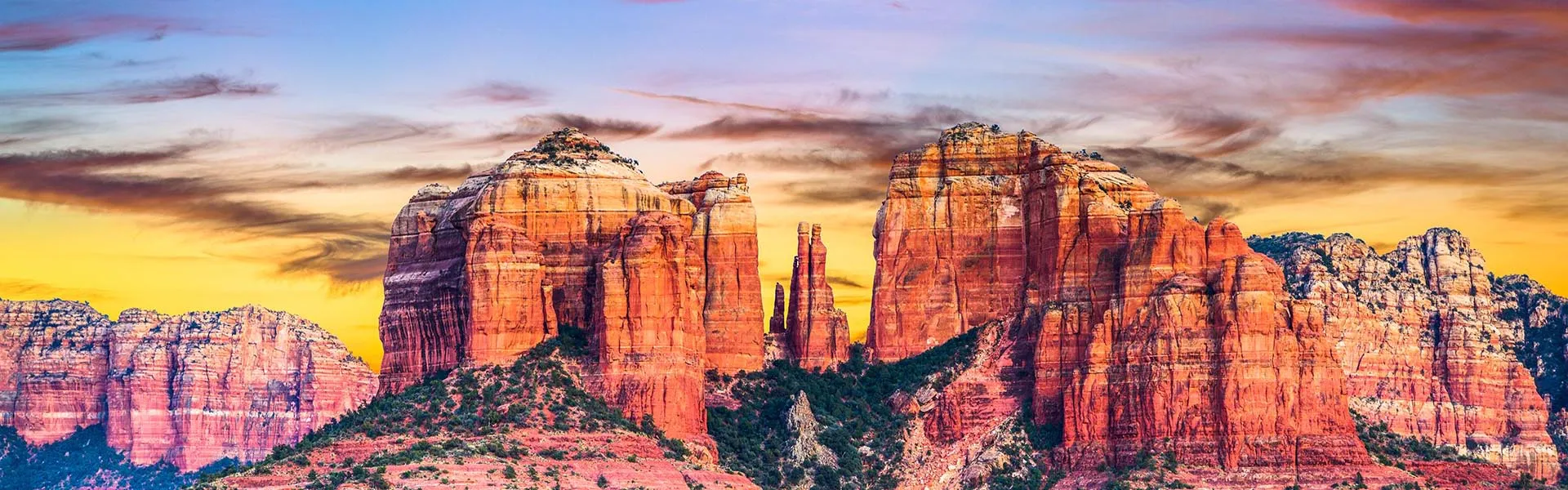
Sedona’s picturesque red rock scenery has made it a short-term rental hotspot. Although local officials have explored stricter controls, state law bars an outright ban. Instead, Sedona focuses on enforcing existing rules related to parking, noise, and traffic impacts. Operators must handle TPT (or ensure the platform does) and are encouraged to be mindful of preserving the area’s unique environmental and cultural character. Sedona has a local sales tax that—combined with county and state taxes—can approach or exceed 12%.
6. Flagstaff
Flagstaff, known for its proximity to the Grand Canyon and mountain attractions, does not require a specialized short-term rental permit as of this writing, but you must abide by noise ordinances and other neighborhood regulations. The combined state, city, and county TPT/sales taxes can total around 11%. You should verify with the City of Flagstaff’s official website to see if they have adopted any new registration or health-and-safety rules applicable to Airbnb hosts.
Takeaway
Arizona short-term rental regulations are locally governed, meaning hosts must comply with their specific city or county ordinances rather than a single statewide law. While statewide law prevents cities from banning short-term rentals outright, municipalities have introduced licensing, safety, and nuisance-control rules to manage neighborhood impacts. Meanwhile, tax obligations can include a combination of state TPT, county, and municipal rates—all of which hosts must collect and remit if not handled by the booking platform.
Because each Arizona city can adopt distinct requirements, it’s vital to review the most current municipal codes and official government websites. Pay particular attention to any new city ordinances that mandate short-term rental registration or annual licensing. With proper planning, consistent tax compliance, and attention to local rules, you can take full advantage of Arizona’s robust short-term rental market while maintaining a good standing with local authorities.
Current Airbnb & VRBO Trends by City
FAQ
What is a short-term rental in Arizona?
Arizona defines a short-term rental as any residential property rented for fewer than 30 consecutive days. Arizona is notable for having strong state-level preemption laws that limit local governments' ability to ban STRs outright — making it one of the more host-friendly regulatory environments in the US.
Does Arizona have statewide short-term rental laws?
Yes. Arizona enacted SB 1350 in 2016, which prohibits cities and counties from banning STRs outright. Municipalities can regulate STRs for health, safety, and community character purposes, but cannot use these as a pretext to eliminate the industry. The state requires STR hosts to have a transaction privilege tax (TPT) license.
What taxes do Arizona Airbnb hosts pay?
Arizona STR hosts owe the state transaction privilege tax (TPT) at approximately 5.5%, plus city TPT (typically 1.5–3%), plus county taxes where applicable. Phoenix's combined lodging tax rate is around 12–13%. Airbnb and VRBO collect and remit taxes in most Arizona jurisdictions. Hosts must obtain a TPT license from the Arizona Department of Revenue.
What are the short-term rental rules in Scottsdale?
Scottsdale requires STR hosts to register with the city and display their registration number on all listings. The city enforces noise, parking, and occupancy rules. Scottsdale has implemented a nuisance complaint system where repeated violations can result in permit suspension. As a major resort market, STRs are prevalent but regulation is active.
What are Phoenix's short-term rental regulations?
Phoenix requires STR hosts to register with the city and obtain a city TPT license. Hosts must post a 24/7 emergency contact at the property. Phoenix enforces nuisance regulations — three verified complaints within 12 months can result in permit revocation. The city has also added human trafficking awareness requirements for STR operators.
Are short-term rentals allowed in Sedona?
Yes. Sedona and the surrounding Yavapai County area generally permit STRs, though the city has implemented a registration requirement and TPT licensing. Sedona is a major tourism market, and STRs are a core part of its lodging infrastructure. The city periodically reviews STR density and noise enforcement.
What are the Flagstaff short-term rental regulations?
Flagstaff has enacted stricter STR rules than most Arizona cities in response to housing affordability concerns near Northern Arizona University. The city requires a local STR permit and enforces owner-presence requirements in some zones. Flagstaff charges local TPT on top of state and county rates. Monitor local ordinances as further restrictions have been debated.
Can Arizona cities restrict short-term rentals?
Yes, within limits. Under AZ SB 1350, cities cannot ban STRs entirely, but they can regulate noise, parking, occupancy, and require registration. Phoenix and Scottsdale both use nuisance complaint systems to suspend operators with repeated violations. Cities may also impose local taxes and require emergency contact postings.
What safety requirements apply to Arizona short-term rentals?
Arizona STR hosts must comply with state and local fire safety codes including smoke alarms, carbon monoxide detectors, and fire extinguishers. Pool fencing and safety requirements are strictly enforced given Arizona's year-round warm weather and pool prevalence. Some cities require safety inspections as part of registration.
What are the best Arizona markets for Airbnb investment?
Scottsdale and Phoenix's Arcadia/Tempe neighborhoods offer strong year-round occupancy driven by warm weather, spring training, and major events. Sedona generates premium nightly rates from nature tourism. Flagstaff has strong summer and ski season demand but tighter regulations. Tucson and the SaddleBrooke area offer lower entry costs with solid yields.


